BMW was founded in 1916 during World War I as an aircraft engine manufacturer, producing the
notable BMW IIIa. The company was initially Rapp Motorenwerke, becoming Bayerische Motoren
Werke, or BMW, a year later. Due to post-war restrictions, it transitioned to producing
motorcycles and automobiles. The company was established with a strong reputation in the
motorcycle industry in the 1920s with the release of the R32, featuring a distinctive boxer
engine and a Cardan shaft. It wasn’t until the 1930s that its sports cars gained popularity,
with the BMW 328, which debuted in 1936, becoming a notable success. During World War II, BMW
produced aircraft engines for the German military, and their factories were heavily damaged.
Production was temporarily halted.
In the 1960s, BMW underwent a significant transformation, transitioning from near bankruptcy to
revival with the introduction of the “New Class” models, such as the BMW 1500 and the
700, filling a crucial gap in their lineup. They expanded their presence in the small car market
with the 700 and 02 Series and purchased Hans Glas GmbH to expand its production capacity. The
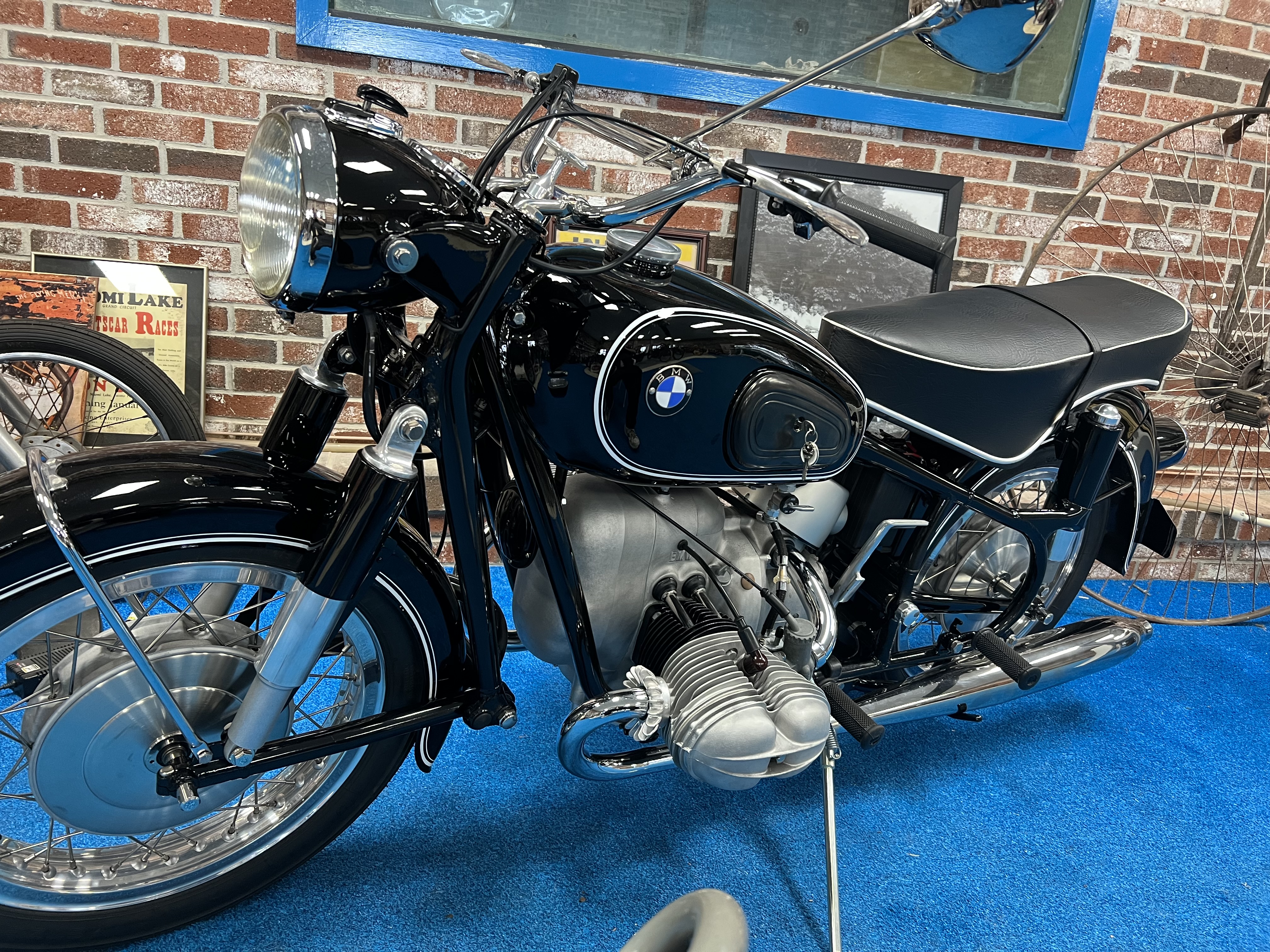
R69S motorcycle was the flagship sport bike of the era, gaining recognition as a classic and
the fastest boxer engine available at the time. Alongside the R69S, BMW also offered models like the
R50/2 and R60/2, and later the /5 series, which modernized the lineup with features such as electric
starters and telescopic forks.
The R69S, produced from 1960 to 1969, was a high-performance, high-compression sport bike featuring
a 594cc horizontally opposed twin boxer engine that produced 42 horsepower and was capable of
reaching speeds exceeding 102 mph. Its low-maintenance shaft drive was a hallmark feature of BMW
motorcycles, providing a smooth and reliable power transfer to the rear wheel. The signature
boxer engine featured a flat-twin design, which contributed to the bike’s distinctive
character and performance. This model represented a significant upgrade from the previous BMW
models. It was designed with lugs for easy sidecar attachment, something its strong, shaft-driven
engine easily supported. The utilization of the innovative Earles-type leading-link front fork, a
feature first seen on BMW works racers, provided enhanced stability and control. Its transmission
was a 4-speed manual, and the suspension was supported with a swingarm with dual adjustable,
hydraulically damped shocks in the rear. Front and rear 200mm drum brakes provided quick stopping
power for its 18-inch wheels with light alloy rims. The R69S featured a 6.5-gallon Schorsch Meir
sport tank, European handlebars, and a full-duplex tubular frame, known for its strength and
lightness.
This model was a commercial success, attracting discerning enthusiasts who appreciated its superior
engineering and performance. It was also a racing success, as modified R69S models at
Montlhéry in 1961 set average speed records for 12- and 24-hour average speeds, breaking
previous records set by Velocette, with a 24-hour speed of 109.24 mph. This record remained
unsurpassed for over a decade! The R69S won the Thruxton 500-mile, Barcelona 24 Hours, the
Silverstone 1,000-kilometer, the Bol d’Or endurance competition at Montlhéry, and the
24-hour Montjuïc, Spain race in the same year. A Works-modified R69S won both the 1960 and the
1961 German Off-Road Championships, and rider Sebastian Nachtmann earned a gold medal and his team
the International Trophy at the International Six Days Trial in Wales.
The 1961 BMW R69S developed a reputation for its smooth, quiet, and high-quality build, earning it
the title of a luxury tourer renowned for its speed, handling, and engineering excellence. It is now
an iconic and highly sought-after classic motorcycle, remaining popular and collectible, and
proving its design to be elegant and timeless.
By the 1970s, BMW’s position in the luxury market was solidified with vehicles such as the
501, Isetta microcar, and the 3, 5, and 7 series. In 1972, BMW Motorsport (later BMW M GmbH) was
founded to focus on high-performance vehicles. Since then, they’ve acquired Rolls-Royce and
DesignworksUSA, expanded globally to South Africa and the US, and have even entered the electric
vehicle market.
BMW is still widely recognized for its luxury vehicles and motorcycles, renowned globally for
their exceptional performance, innovative technology, and sleek design. They are also known for
their sporty driving experience, German engineering, and their reputation for quality. Their engines
are known to be powerful, their handling precise, and their suspension systems balanced. BMW has
become a major player in the premium car market, producing a range of vehicles that includes sporty
coupes and sedans, as well as practical SUVs and high-performance models. Motorcycles are still
produced under the BMW Motorrad brand. They remain as innovative as they were in their origins,
incorporating features such as the iDrive infotainment system, advanced driver-assistance systems,
and pioneering technologies in electric and hybrid vehicles. Their slogan, “The Ultimate
Driving Machine,” along with their logo, is globally recognized, and their vehicles often
retain a high resale value.
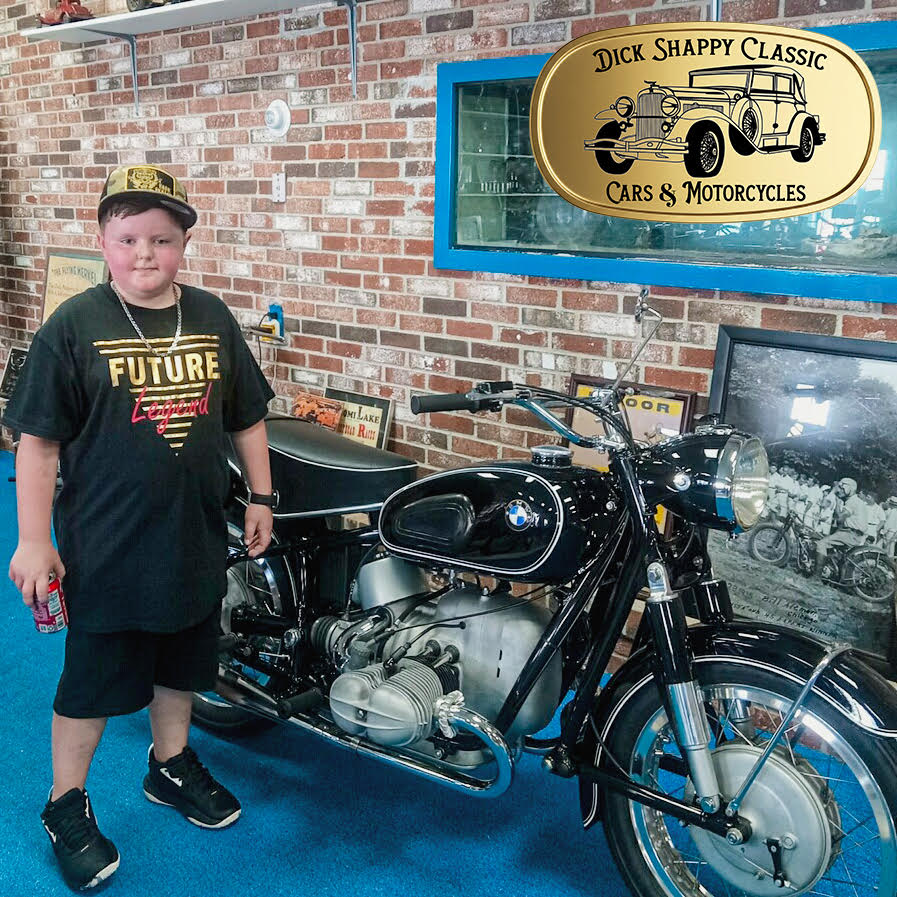
This particular 1961 BMW R69S is more than a BMW collectible in the Shappy family. In 1960, when
Dick was only 15 years old and without a license, his brother, Bob, purchased the bike late in
that year. Dick had fond memories riding with his brother on what would become Bob’s daily
rider. It was on this BMW that they even got into their first accident, sliding in oil coming back
from the beach on Tower Hill Road in North Kingstown, RI, and it was this bike that taught them to
hop right back on and face their fears. When Bob passed away in 2009, Dick had all but forgotten
about this relic until the family started going through a pile of rubble and odds and ends they
suspected were trash. Underneath, he was shocked to find this very bike, though certainly not in the
condition he remembered it in its heyday. It had been ridden often and well, and though it withstood
the test of time, it would need a lot of love to give the R69S back its spark.
Luckily, Dick Shappy had spent much of those years developing an even deeper love,
appreciation, and understanding of motorcycles—especially of the antique and vintage
variety. He decided that this bike deserved to be restored to its original condition, and he
reached out to the well-known BMW specialist, Richard Barsotti of Wasted Spark Motorcycles in
East Topsham, Vermont. It required a complete ground-up restoration, but Barsotti, a master at his
craft, was determined. About two years later, the BMW returned to the Shappy family, shining
brighter than it had on that day in 1960 when it came off the line and was taken home by his
brother, Bob.
Receiving the R69S just before his private annual vintage car and motorcycle show of 2023, Dick
decided to ensure that this motorcycle would stay in the family. He wasn’t the only one
with a passion for antique vehicles—his great-nephew, Ryker, has been a motorhead since he was
young, showing great interest and promise. At Dick's eighth annual show, (Great) Uncle Richard gifted
to his brother's grandson at just nine years old, whom Bob never got to meet, the prized family
heirloom.
Since then, Ryker’s enthusiasm has not dampened. He’s assisted Uncle Richard in the
restoration of a 1917 Reading Standard motorcycle and has been at his side observing some of
the great classics at shows all over New England. This year, he intends to enter his 1961 BMW
R69S into the prestigious Audrain Automobile Museum’s Concours d’Elegance in their
“30 Under 30” Class, so Dick Shappy is doing something different. Instead of selecting
one of his award-winning vehicles from his sizeable collection, he is setting aside the opportunity
to take home a coveted Audrain award in support of his great-nephew. The 30 Under 30 class, for
entrants under the age of thirty who have spent less than $30K on their restoration, is the
original brainchild of Jay Leno, Honorary Chairman of the Motor Week. As the first class of its
kind in the world, Dick Shappy considers it an important step in inspiring the youth to take up the
mantle and cherish our automotive history. He hopes that they’ll fall in love, as he and Ryker
have, with the many great American automobiles and motorcycles, and strive to keep that history
alive for the next generation to come.